


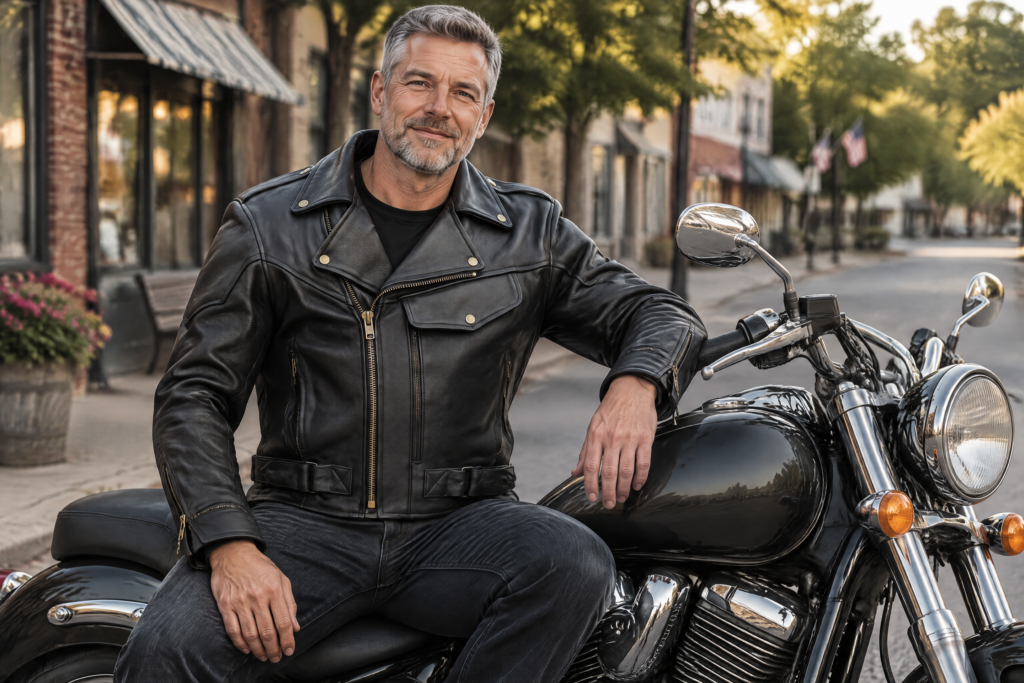
Best Men’s Leather Motorcycle Jacket Brand for Protection and Style
No single brand wins for every rider, but the best men's leather motorcycle jackets share the same traits: thick full grain cowhide,…
Read the story →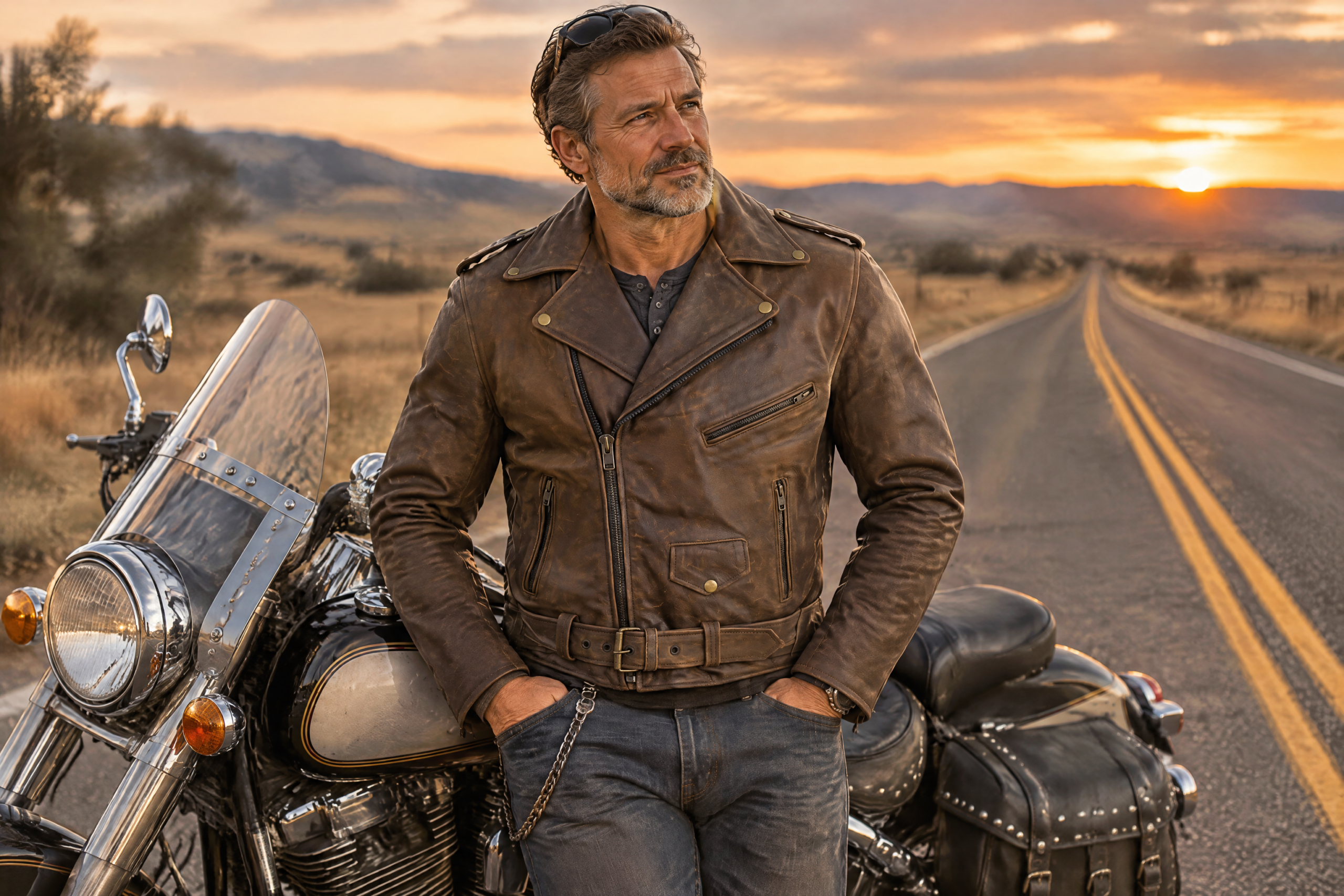
The best men’s leather motorcycle jacket under $300 is one made from real cowhide, with a heavy-duty zipper, full lining, and a cut that fits you while you are leaning forward on the bike. Classic racer and club-style jackets usually give the most leather for the money, while vented and armored designs suit riders who log serious miles. Choose the style that matches how you ride, then check the leather, stitching, and fit before you look at the extras.
A budget of $300 is enough for a durable, good-looking leather jacket that will last years if you look after it. It is usually not enough for the most expensive full racing suits or the most advanced protective gear. That is fine for most street, cruiser, and rally riders. You can get real leather, solid construction, and a classic look without paying for track-level features you will not use.
The main trade-off at this price is between thick, heavy leather and extra features. A basic jacket in good hide often beats a feature-packed jacket in thin, cheap material. Put your money into the leather and the stitching first.
| Style | Best for | Things to know |
|---|---|---|
| Classic racer (banded collar, slim cut) | Sport and standard bikes, riders who like a clean look | Fits close to the body, so check shoulder and sleeve room |
| Club or cruiser style | Cruisers, rallies, everyday riding | Roomier cut, easier to layer under, often with a classic collar |
| Vented jacket | Warm climates and summer riding | Cooler, but less wind protection when temperatures drop |
| Jacket with armor pockets | Highway riders and anyone who wants added protection | Check whether armor is included or sold separately |
Leather is where most of the quality is. A few general rules help when you compare jackets.
Once you know the leather is real, look closely at how the jacket is built. Cheap jackets tend to fail at the seams and zippers first.
Leather jackets are cut differently from casual jackets, so your usual size may not carry over. Fit matters for comfort and for safety, because a jacket that is too loose can shift in a slide.
Wipe off dirt and road grime with a damp cloth. Let the jacket air dry away from direct heat, because radiators and hair dryers can stiffen and crack the leather. Apply a leather conditioner once or twice a year, more often if you ride in rain or hot sun. Store the jacket on a wide hanger, never crammed in a bag. If it gets soaked, let it dry slowly at room temperature and condition it afterward.
Still choosing between makers? Our guide to the best leather motorcycle jacket brand covers what protection and style actually mean in a jacket.
American Biker Co is an online retailer of biker-themed clothing and accessories for US motorcycle riders. Its range includes men’s and women’s leather motorcycle jackets, leather vests (including styles with concealed carry pockets), acid wash and denim biker shirts, biker tees, and embroidered patches in military, patriotic, and personal designs. It also carries Patriotic, military, and Americana designs and Sturgis rally apparel, so it is one good place to look if you want a jacket and the gear to go with it.
Shop the full range of leather biker jackets when you are ready to compare hides, cuts and prices in one place. If you want black, the Motorcycle Biker Leather Jacket in Black for Men ($240) and the Premium Leather Jacket with Silver Hardware for Men ($240) both come in under $300; for brown, the Distressed Brown Biker Leather Motorcycle Jacket Concealed Carry Pockets for Men is $255.
Yes. Many cowhide jackets fall under this budget, especially in classic racer and club styles. Check the product description for the type of leather and avoid anything labeled bonded or faux.
Cowhide is usually the better pick for riding because it is tougher and more abrasion resistant. Lambskin is softer and lighter but generally less durable.
If you want to feel that softness on a jacket built for the road, look at the brown lambskin leather jacket.
It should fit snugly without restricting movement. In the riding position, the sleeves should reach your wrists and the shoulders should not pull. Leather loosens a little with wear.
Armor adds protection at the shoulders, elbows, and back, and it is worth having if you ride at highway speeds. Some jackets include armor pockets, so check whether the armor itself comes with the jacket.
Once or twice a year is a good baseline for most riders. Condition it more often if you ride in rain, heat, or dry climates.
No single brand wins for every rider, but the best men's leather motorcycle jackets share the same traits: thick full grain cowhide,…
Read the story →
Thunder in the Smokies is a small-town rally with a world-class backyard. It sets up on Soco Road in Maggie Valley, North…
Read the story →
Some rallies are about the party. The Four Corners Motorcycle Rally is about the roads. Held every Labor Day weekend in Durango,…
Read the story →
Thunder in the Smokies is a small-town rally with a world-class backyard. It sets up
Some rallies are about the party. The Four Corners Motorcycle Rally is about the roads.
Lake of the Ozarks Bikefest is the Midwest’s late-summer send-off, with bikes all over the